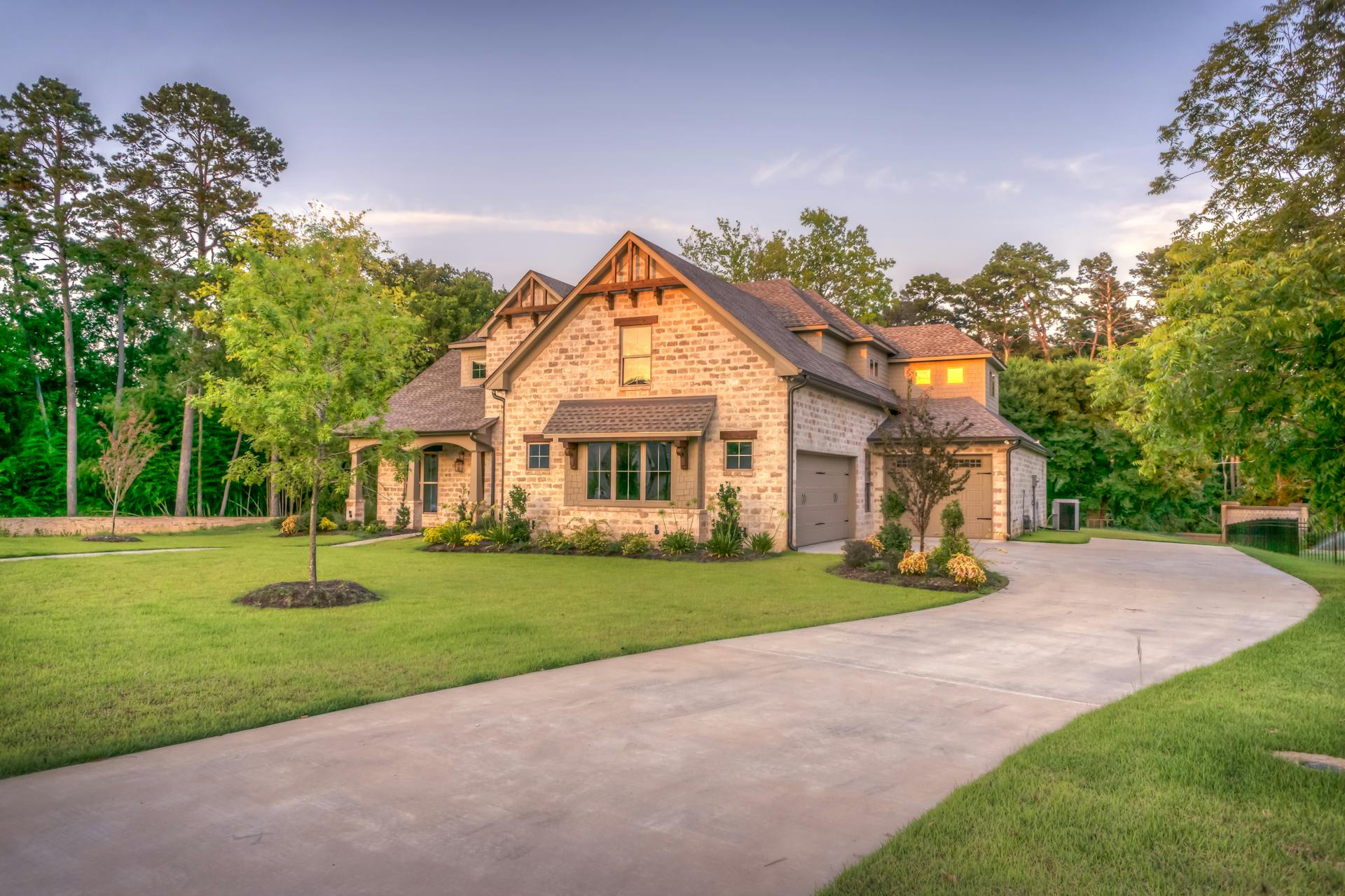
Solar panels for new builds ready for the Future Homes Standard
From March 2027 every new home in England must include rooftop solar covering 40% of the ground floor area. We are the UK specialists who plan, supply and install Part L 2026-compliant solar PV — for housebuilders, developers, architects and self-builders.
Solar panels for new builds are PV systems designed in at construction phase to meet the Future Homes Standard's 40% ground-floor-area rule. From 24 March 2027, solar panels on new builds become effectively mandatory in England — and fitting new build solar panels during construction costs roughly 20-30% less than retrofitting them later (~£1,200/kWp in-roof at build stage vs £1,565-£1,686/kWp MCS retrofit average).
The UK's dedicated new-build solar specialists
We install solar panels for new builds across England, Wales and Scotland — and new builds are all we do. That focus is the difference: where a general solar installer or comparison site treats new-build solar as a footnote, we plan, supply and commission Future Homes Standard-compliant new build solar panels as an integral part of the construction programme. From a single architect-led self-build to a 5,000-plot developer framework, we size the array to the 40% rule, model SAP/HEM compliance, and hand over the MCS certificate and O&M pack at completion.
Solar panels on new builds are no longer optional. Under the Future Homes Standard, every new home in England commencing Building Control from 24 March 2027 must include rooftop PV equivalent to 40% of its ground floor area, with a transitional period to 24 March 2028. We help developers and housebuilders and self-builders get ahead of the deadline — see new-build solar costs by house type or size your plot with our FHS calculator.
How new-build solar is integrated: in-roof vs BIPV vs on-roof
The integration method is the decision that defines cost and kerb appeal on a new build. Here's how the three options compare at 2026 prices:
| Method | 2026 cost | Best for |
|---|---|---|
| In-roof solar panels | £1,150–£1,290/kWp | Volume housebuilders & most self-builds — flush, cheapest net |
| BIPV / solar roof tiles | £2,400–£3,200/kWp | Conservation areas, listed-curtilage, premium plots |
| On-roof (mounted) | £1,150/kWp | Rarely used new-build — retrofit default |
Are solar panels mandatory on new builds? Effectively yes from 24 March 2027 — the Future Homes Standard sets carbon targets a new home can only meet with solar PV plus a heat pump. Read the 40% PV rule in full →
The Future Homes Standard rewrites how every new build is delivered
On 24 March 2026 the UK Government published the Approved Documents L and F for the Future Homes Standard. From 24 March 2027 — with a 12-month transitional period to 24 March 2028 — every new home in England must:
- 1Include solar PV covering 40% of the ground floor area — typically a 3-4 kWp array on a 3-bed house. Token "2-panel" systems no longer comply.
- 2Use low-carbon heating only — air source heat pumps or heat networks. Gas, oil and "hydrogen-ready" boilers are effectively banned in new builds — the carbon targets cannot be met with them.
- 3Meet the notional fabric and air-permeability spec — fabric U-values carry over from 2021 (wall 0.18 W/m²K notional); air permeability tightens to 4.0 m³/(h·m²) with continuous mechanical ventilation (dMEV) in the notional dwelling.
- 4Demonstrate 75% lower CO₂ vs the 2013 baseline — the previous Part L 2021 uplift delivered only 31%. This is the biggest single tightening since the Building Regulations were created in 1965.
FHS 2026 by the numbers
Every figure on this page is taken from the published Approved Documents L and F (24 March 2026), the FHS Impact Assessment (HM Treasury), and NHBC registration data.
Why FHS-ready procurement starts now, not in 2027
The Future Homes Standard comes into force on 24 March 2027 — but for any developer or self-builder whose project will not break ground before mid-2026, the practical procurement deadline is now. The reasons compound:
- 1 Heat pump and PV supply will tightenIndustry estimates suggest UK ASHP installation capacity needs to scale several-fold by 2027 to meet FHS demand. Bulk panel procurement frameworks negotiated in 2026 secure 2027-28 capacity at locked pricing; spot-procurement into 2027 is widely expected to carry a premium against current rates.
- 2 SAP/HEM assessor capacity is constrainedSAP 10.3 is the sole approved compliance methodology at FHS launch — the Home Energy Model launch was postponed in June 2026, and once approved HEM will dual-run with SAP for at least 24 months before becoming the sole route. Assessor capacity for SAP 10.3 re-accreditation is the near-term pinch point; frameworks signed now lock in modelling capacity at predictable rates.
- 3 Buyer expectations have already shifted42% of new homes completed in Q4 2024 already had solar PV — even before the regulatory requirement. Buyer expectations of FHS-spec generation are now baked into plot pricing, so completing a 2026 plot without PV risks a £8k-£15k saleability discount against neighbouring FHS-spec plots.
- 4 Programme buffer mattersTransitional protection applies only where a building notice, initial notice or full-plans application is with building control before 24 March 2027 AND that building commences on site before 24 March 2028 — assessed per building. Plots outside that window must build to FHS regardless. Designers starting now have time to optimise spec; designers starting in late 2026 will be working under cost pressure.
For the full regulatory background see our FHS 2026 complete guide and the 2026/27/28 timeline page.
What FHS solar costs by house type
Volume-developer pricing for the FHS-required PV array — separate guides for each size break out the full package cost including ASHP, battery and EV charger.
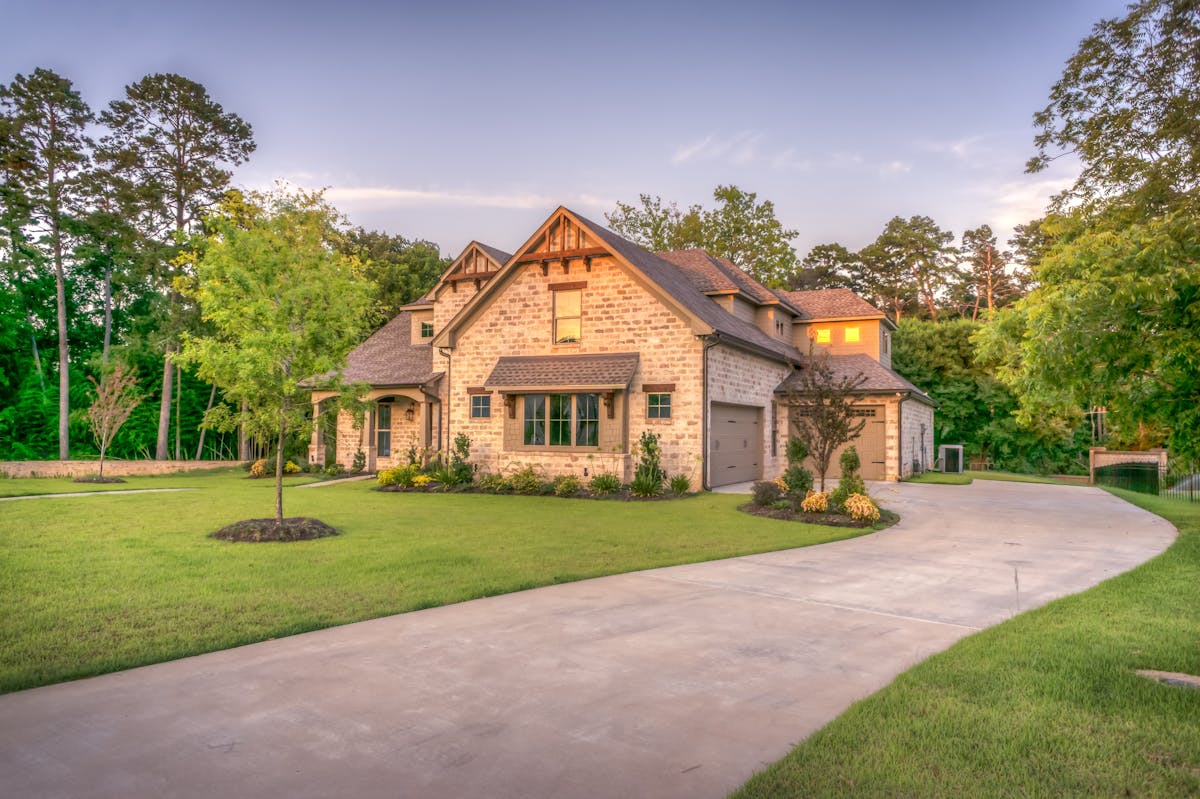
What FHS-compliant solar looks like on a new build
In-roof systems, BIPV solar tiles, battery storage and heat-pump integration — across volume housebuilder sites, self-build plots and social housing schemes.


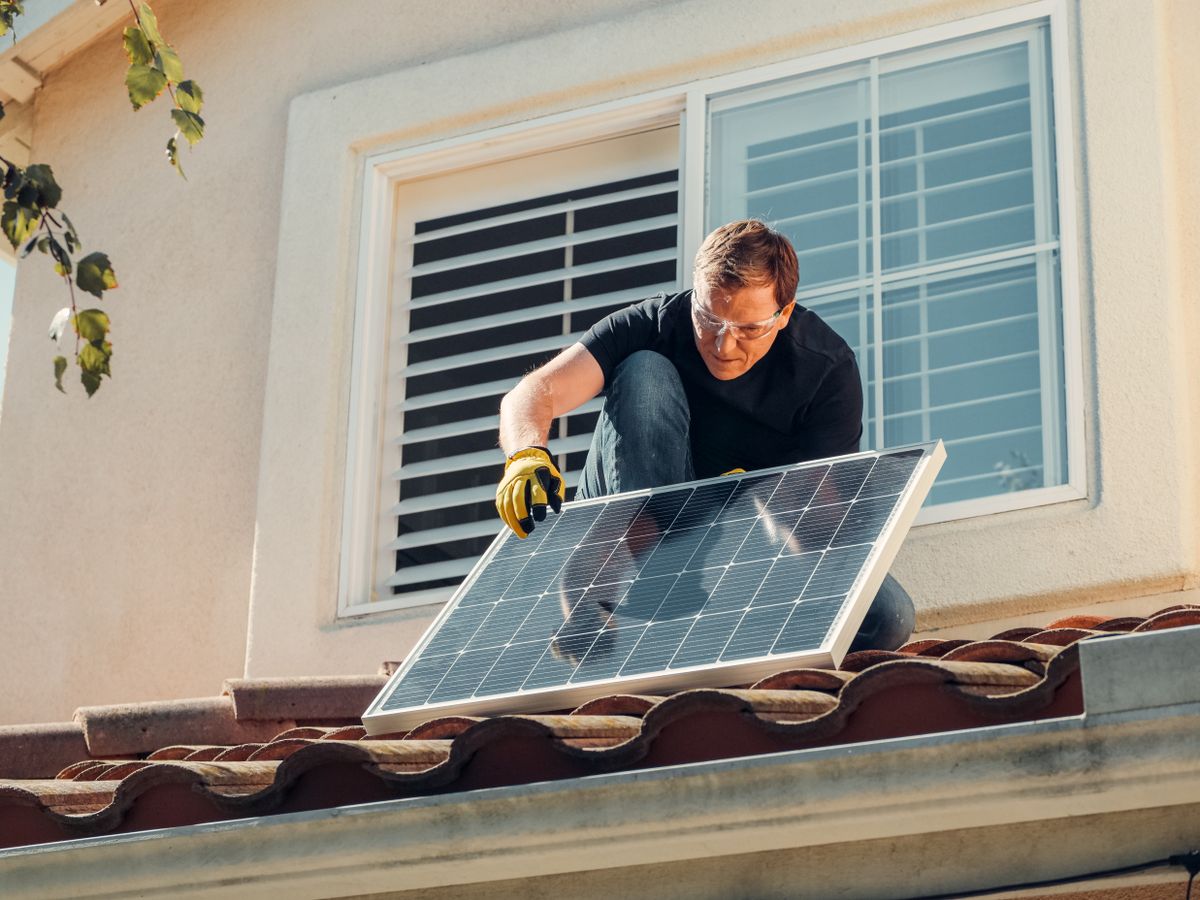

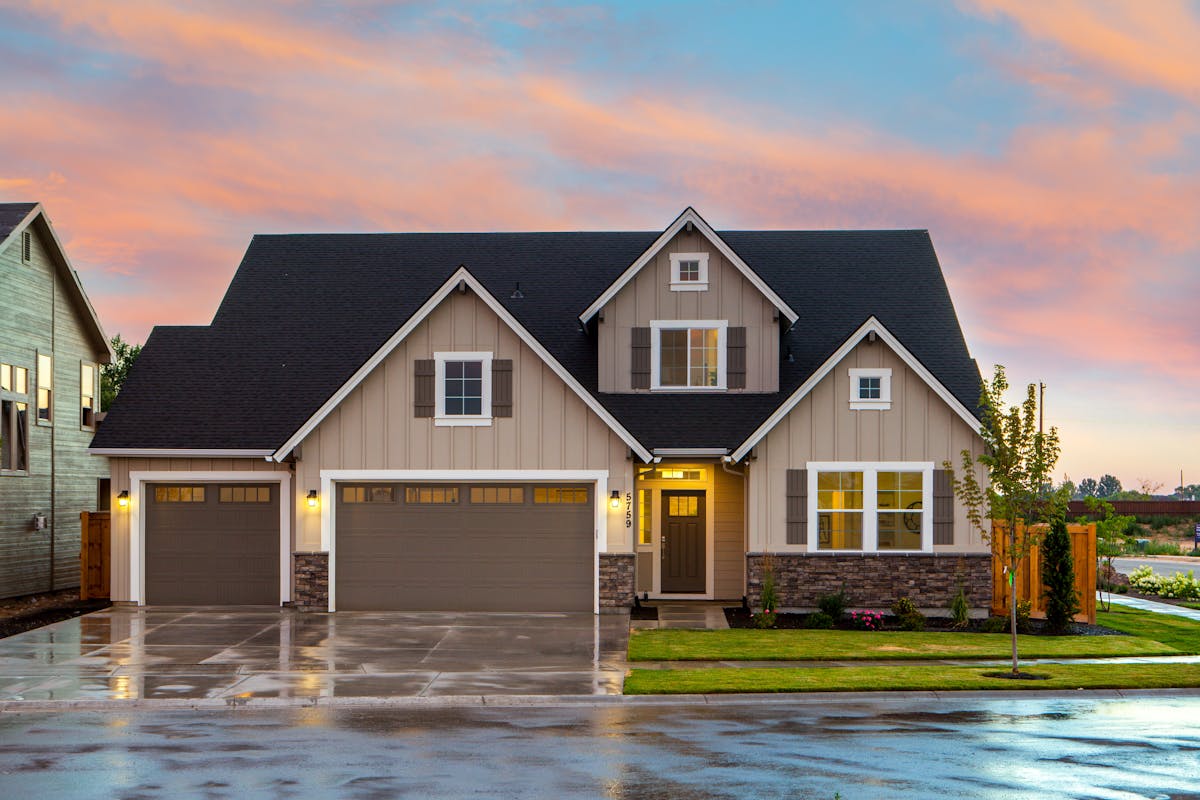


Built for both sides of the new-build market
Volume housebuilders need cost certainty, compliance docs and per-plot pricing. Self-builders need a partner who works around their architect. We do both.

Housebuilders, contractors & housing associations
Bulk solar+battery+ASHP packages priced per-plot. Factory pre-fit. SAP/HEM compliance pack with every plot. 20-year insurance-backed workmanship — NHBC, LABC and Premier accepted.
Plot owners, custom build & architects
Design-led PV that works with your architect, your timetable and your Building Control inspector. In-roof, BIPV solar tiles and full integration with heat pump and battery systems.
The 6 questions every new-build buyer and developer asks
How many solar panels do I need on a new build?
For a typical 3-bed semi: 8 panels (3.4 kWp). For a 4-bed detached: 12 panels (5.2 kWp). For a 5-bed executive: 18 panels (7.6 kWp). The Future Homes Standard rule is panel area equal to 40% of ground floor area.
What is in-roof solar?
In-roof solar integrates panels below the tile line — the system replaces the tiles or slates it covers and sits flush with the surrounding roof. The default choice for FHS-compliant new builds at £1,150-£1,290 per installed kWp.
What are solar roof tiles?
Solar roof tiles (BIPV) are individual photovoltaic units replacing conventional tiles 1-for-1. UK 2026 cost: £2,400-£3,200 per kWp installed (vs £1,150-£1,290 for conventional panels). Best for Conservation Areas.
What is the best battery storage for a new build?
Top three for 2026: Tesla Powerwall 3 (13.5 kWh, £6,500, best for backup); GivEnergy All-In-One (13.5 kWh, £5,800, best UK-made); SunSynk modular (5.32 kWh stackable, £3,200, best for matched inverter).
How much does solar cost on a 3-bed new build?
£4,080 for a 3.4 kWp in-roof installation at build stage (~£1,200/kWp, Spirit Energy published basis). £5,320-£6,740 for self-build retail (MCS 2026 averages; offset by 0% VAT). Full FHS package including ASHP and ventilation: ~£10,830 total per plot.
What finance options apply to new-build solar?
New-build solar is zero-rated for VAT as part of new-dwelling construction (Notice 708); the separate retrofit ESM relief is 0% until 31 March 2027 then 5%. Plus self-build mortgage drawdowns, green-mortgage cashback and the £39bn Social and Affordable Homes Programme (2026–2036) funding for social housing.
From UK Top-10 to one-off self-build — every segment covered
How we deliver FHS-compliant solar
Eight specialist services covering every step of new-build solar PV — from in-roof integration to SAP/HEM compliance modelling.
In-Roof Solar Integration
Factory-fitted in-roof PV systems integrated into the roof structure during construction — the FHS-default specification.
Learn more →Building Integrated Photovoltaics (BIPV)
Solar tiles, solar slates and PV-glass facades — for premium plots and Conservation Areas.
Learn more →SAP & HEM Compliance Modelling
Full SAP 10.3 and Home Energy Model assessments certified by Elmhurst, Stroma and BRE-accredited assessors.
Learn more →Developer Procurement Packages
Bulk solar+battery+ASHP packages priced per-plot across whole sites.
Learn more →Battery Storage Integration
AC-coupled and DC-coupled batteries sized for FHS half-hourly self-consumption modelling.
Learn more →EV Charge Point Integration
Solar-aware EV charging that diverts surplus PV to the car instead of export.
Learn more →Heat Pump Integration (ASHP)
Solar-paired air source heat pumps — the standard FHS heating package.
Learn more →Solar Panel Maintenance & Servicing
20-year insurance-backed workmanship + annual solar panel servicing + remote performance monitoring as standard on every new build.
Learn more →We specify the manufacturers warranty providers trust
NHBC, LABC, Premier and Buildmark all accept installations using these manufacturers — vetted, IEC-certified, and proven on UK new builds.
A four-stage process that protects your build programme
Every project — whether a 1-plot custom build or a 1,000-plot strategic site — moves through these four stages. The compliance pack, the warranty and the per-plot price are locked at stage 1.
Plot or scheme assessment
You send us drawings, plot count and target start-on-site. We return indicative pricing within 48 hours plus a sizing brief against the 40% PV rule.
Design & SAP/HEM modelling
House type by house type — array layout, SAP/HEM compliance modelling, Building Control compliance pack. Includes TM59 overheating.
Factory pre-fit & site install
In-roof cassettes built off-site to your roof truss schedule. Just-in-time delivery and a 2-hour on-site final connection per plot.
Commissioning & handover
MCS, EPC, monitoring app onboarding, buyer handover pack. 20-year insurance-backed workmanship — accepted by NHBC, LABC, Premier and Buildmark.
Why developers choose a specialist new-build installer
Volume housebuilders have three procurement routes for FHS-compliant solar. Here's how the specialist route (us) compares against a traditional generalist contractor and a retail solar installer.
| Feature | Specialist new-build installer (us) | Traditional generalist M&E (in-house solar) | Retail solar installer (domestic retrofit firm) |
|---|---|---|---|
| Per-plot price locked at procurement | |||
| Factory pre-fit in-roof systems | Sometimes | ||
| SAP / HEM modelling included | |||
| NHBC-approved workmanship warranty | Sometimes | ||
| 20-year insurance-backed warranty | Sometimes | ||
| Building Control compliance pack | |||
| Bulk panel/inverter procurement | Sometimes | ||
| 0% VAT on new-build self-builds | |||
| Single point of accountability | Sometimes |
What our developer & self-build clients say
Three voices from across the new-build segment — volume housebuilder, custom-build self-build, and a housing association.
"They priced our whole 240-plot site at the land-bid stage, locked the figure in, and delivered on programme. The factory pre-fit on roof cassettes saved us four weeks. Per-plot pricing came in £400 below the FHS Impact Assessment benchmark."
"I was nervous about how FHS would affect our self-build budget. Their architect-led service started at RIBA Stage 2 — by Stage 4 we had a 6.8 kWp in-roof spec, a HEM model showing comfortable compliance, and a price that worked with our build loan stage payments."
"We had to deliver 60 affordable homes to FHS-equivalent spec under affordable-homes grant funding. The team handled SAP/HEM modelling across all four house types, NHBC approval and tenant onboarding. Bills are down 86% on average for our tenants — that's a real fuel poverty win."
FHS-ready new builds we've delivered
From consultation to enforcement
The Future Homes Standard journey spans 8 years — but the three dates that matter for plot owners and developers are highlighted below.
-
First FHS consultation opened
-
Government response to first consultation
-
Part L 2021 interim uplift
-
Second FHS consultation
-
Home Energy Model (HEM) consultation response
-
Government announces mandatory rooftop solar on new builds
-
Approved Documents L & F published
-
Government postpones Home Energy Model launch — SAP 10.3 sole methodology at FHS launch
-
FHS comes into force in England
-
Higher-Risk Buildings (HRB) provisions in force
-
Transitional period ends — all new builds must comply
FHS-active locations across the UK
We install on volume sites and one-off plots in every major UK housebuilding region. Each location guide covers the local planning context and FHS-ready developments in detail.
Solar panels on new builds — the questions every buyer asks
Verified against the published Approved Documents L and F (March 2026) and the FHS Impact Assessment.
When do new builds have to have solar panels in the UK?
How big does the solar array have to be?
Can developers fit a token 2-panel system to tick the box?
Will gas boilers be banned in new builds?
What does the Future Homes Standard cost per home?
Who owns the solar panels on a new build?
Do solar panels invalidate the NHBC warranty?
Are existing homes affected by FHS?
Get an FHS-compliant solar quote in 48 hours
Tell us your plot details and we return a fully-costed system sized to Part L 2026 (40% PV rule), with the SAP/HEM compliance pack — named deliverable, within 48 hours.
- ✓ Fully-costed system + SAP/HEM compliance pack in 48 hours
- ✓ No lead auction — your details are never sold to multiple installers
- ✓ Developer per-plot pricing or self-build fixed quote
Request your FHS quote
The fields below are your eligibility check — they're how we size and cost your system accurately.