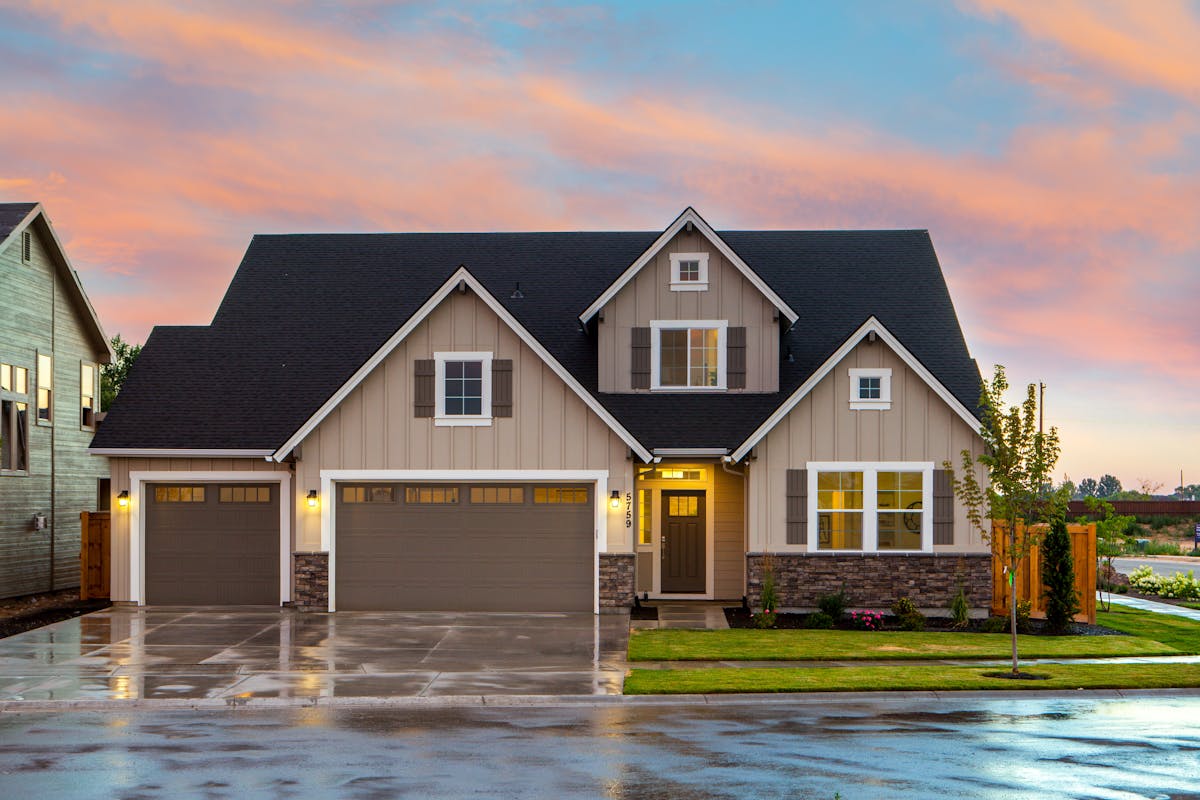
LHC framework procurement for a Yorkshire housing association. 60-unit terrace and semi development to AHP 2026 specification — Future Homes Standard equivalent. 3-bed semis with 3.6 kWp arrays, tenant-owned. £42/month average bill reduction.
The brief
A Yorkshire housing association (40,000+ stock units) procuring a 60-unit terrace and semi-detached scheme on a brownfield site in the Sheffield suburbs. Funded by Homes England's Affordable Homes Programme 2026-31, the funding terms required Future Homes Standard-equivalent specifications — meaning solar PV at the 40% ground floor area benchmark, ASHP heating in place of gas, and the enhanced fabric specification. Procurement route: the LHC (Local Authority Building Control Solutions) renewable energy framework, on which we hold a position.
Unit mix and system specification
40 × 3-bed semis (3.6 kWp arrays sized to 42.5 m² ground floor), 20 × 2-bed terraces (3.0 kWp arrays sized to 32 m² ground floor). All units paired with 5 kW Vaillant aroTHERM plus ASHPs and 200L hot water cylinders. No battery storage (cost not within AHP funding envelope and adds limited tenant bill-reduction value at the relatively low usage profile of social housing tenants). EV charger pre-fit provision but not installed (charger added at tenant request post-occupancy).
LHC framework pricing
Per-plot pricing under the LHC framework — no separate tender required, framework saved the housing association ~£15,000 in procurement officer time. In-roof 3.6 kWp arrays at £3,800/plot; in-roof 3.0 kWp at £3,200/plot. Total PV cost £200,000 across the 60 plots. ASHP package £2,950/plot — £177,000 total. Combined renewables capital cost £377,000 (£6,283/plot average) — well within the AHP funding band for FHS-equivalent units.
Tenant ownership model
Tenant-owned PV: the array is installed by us, transferred to the housing association on completion, and the housing association in turn passes ownership to tenants on tenancy commencement. Tenants therefore retain all generation benefit and the SEG export income. Alternative considered: landlord-owned with PPA agreement — rejected because the tenant benefit per-month was meaningfully larger under the owned model (~£42/mo vs ~£24/mo under PPA), aligning better with the association's fuel poverty mission.
Compliance and handover
SAP 10.3 modelling for every plot. Average DER 6.4 kgCO₂/m²/yr (TER 8.6) — 26% margin. EPC band A (87 average). All 60 units handed over within the AHP funding window. Tenant onboarding included a 30-minute solar-and-heating briefing for every new occupant, plus a printed monitoring guide and 12-month follow-up call. Tenant satisfaction (12-month NPS) 78 — well above the association's portfolio average.
Outcomes and Phase 2
Average tenant electricity bill reduction £42/month across the first 12 months (data from the housing association's smart meter monitoring). For the lowest-income tenants (Universal Credit recipients) this is a meaningful fuel poverty intervention. Housing association reports zero post-completion warranty calls in the first 12 months. Phase 2 of the same association — 80 units on a Doncaster site — now procured under the same framework with the same specification.