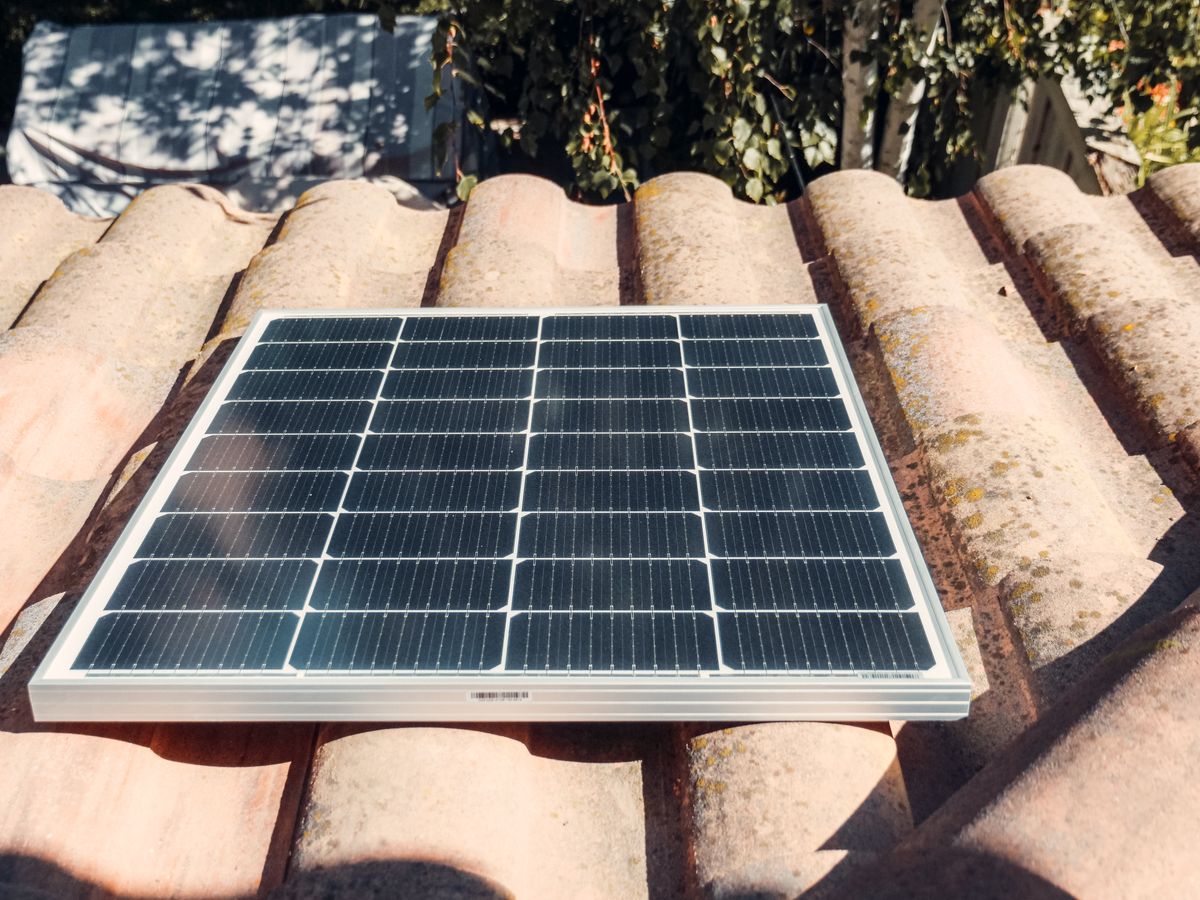
In-roof and on-roof are the two installation methodologies that dominate UK new-build solar PV. They install the same panels with the same inverters and offer the same warranties — what differs is how the array integrates with the roof structure, how it looks from street elevation, how much it costs per installed kWp, and how it sits within your construction programme. For volume new-build work, in-roof has become the default; for self-build the choice is more balanced. This page explains both in detail.
In-roof solar
Panels integrated below the tile line — they replace the tiles/slates over the array area and sit flush with the surrounding roof covering.
- ✓Lower visual profile — looks part of the roof
- ✓Offsets cost of underlying tiles/slates
- ✓Factory pre-fit on roof cassettes possible
- ✓Faster install — concurrent with roofing
On-roof solar
Panels mounted on rails above the existing roof covering — the more common retrofit approach, also valid for new builds.
- ✓Cheaper per kWp installed (~£140/kWp less)
- ✓Easier maintenance access
- ✓Better panel ventilation, slightly higher efficiency
- ✓Works on any roof age
Detailed cost comparison
On a 3.4 kWp new build installation (typical 3-bed semi), the installed system cost breaks down as follows:
| Cost line | In-roof | On-roof |
|---|---|---|
| Panels (8 × 425W) | £1,360 | £1,360 |
| Inverter (5kW hybrid) | £820 | £820 |
| Mounting hardware | £480 (in-roof tray) | £280 (rails & feet) |
| Installation labour | £640 | £540 |
| Cabling, monitoring, MCS | £550 | £550 |
| Sub-total installation | £3,850 | £3,550 |
| Offset: tiles/slates not needed | −£420 | £0 |
| Net new-build cost | £3,430 | £3,550 |
In-roof is therefore approximately £120 cheaper net on a typical new-build 3.4 kWp installation once the displaced roof covering is accounted for. The cost advantage grows on larger systems: a 5.2 kWp 4-bed detached installation saves ~£200 net under in-roof vs on-roof.
Programme implications
For volume housebuilders the programme advantage of in-roof is significant. On-roof requires the roof to be 100% complete before installation can begin, then a 1-day install crew per plot, then sign-off. In-roof can be installed concurrently with roofing (panel cassettes drop into pre-formed tray openings as the tiling progresses) or even factory pre-fit onto panelised roof cassettes off-site and delivered just-in-time to the roofing stage.
Factory pre-fit on a panelised roof cassette typical timing: panels installed on the cassette at our pre-fab facility (4 hours), cassette delivered to site, cassette craned into position with the rest of the roof (no additional time), on-site final electrical connection (2 hours per plot). Total site labour: ~2 person-hours per plot. The equivalent on-roof site labour: ~10 person-hours per plot.
Aesthetics and street elevation
In-roof systems sit flush with the surrounding roof covering — the visual profile is a low rectangular panel area integrated into the tile line. On-roof systems sit 50-80 mm proud of the roof on rails — the panels are clearly distinguishable from the roof at any viewing angle.
Volume housebuilders increasingly specify in-roof because it produces a less industrial street elevation across an estate — important for sales appeal in the buyer-facing show home photography. Self-builders making personal aesthetic decisions split roughly 60/40 in favour of in-roof on architect-led projects we work on.
Where neither in-roof nor on-roof is acceptable (Conservation Areas, listed-curtilage plots, sensitive heritage settings), BIPV solar tile or slate systems are the planning-compliant alternative — see our case study at Cotswolds Conservation Area.
Our recommendation
For new builds we specify in-roof as the default on 90%+ of installations. The aesthetic, programme and net cost advantages outweigh the modest efficiency reduction (in-roof runs ~3-4% lower annual generation due to reduced rear-panel ventilation). On-roof remains the right choice for: (a) retrofit to existing dwellings; (b) flat roofs requiring ballasted mounting; (c) installations on roofs over 30 years old where in-roof tray detailing is uneconomic.