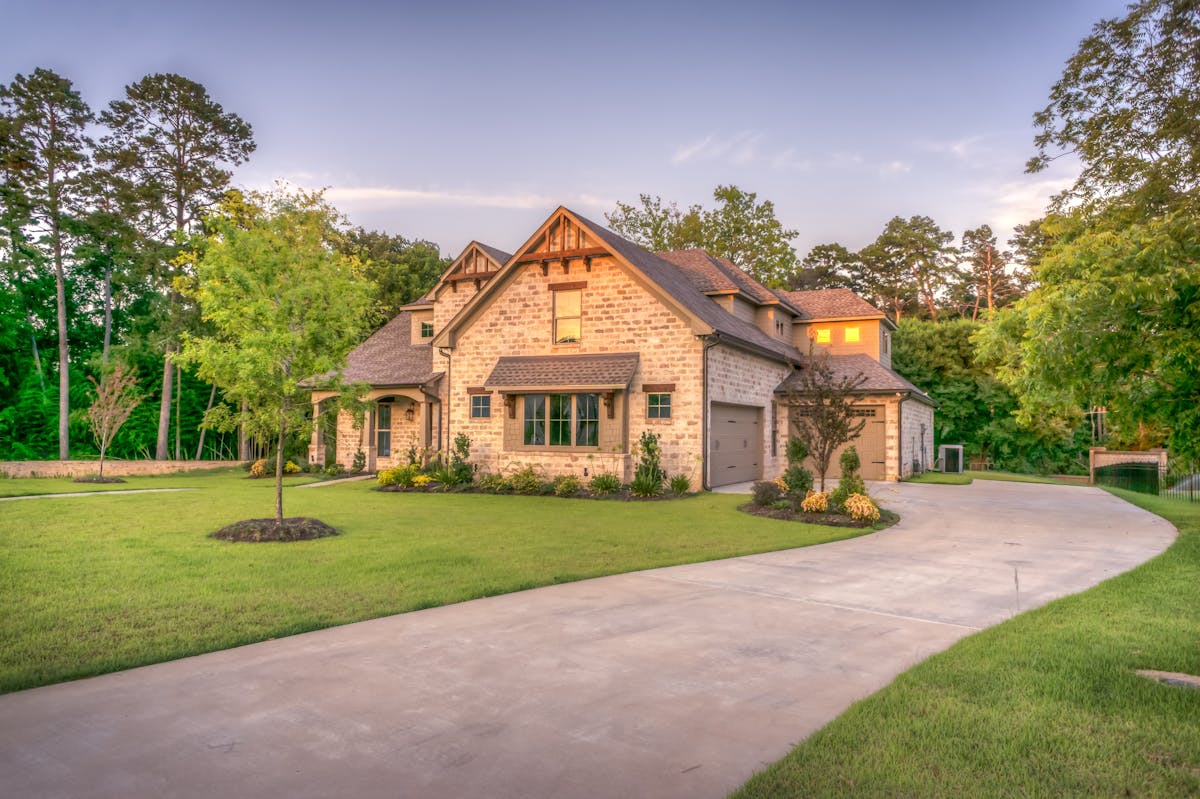
What is the Future Homes Standard?
The Future Homes Standard (FHS) is the UK Government's policy to ensure every new home in England is "zero carbon ready" — designed so that, as the electricity grid decarbonises, no further retrofit work will ever be needed. It is delivered through the 75% CO₂ reduction target written into Part L 2026 of the Building Regulations (versus the 2013 baseline), and through the parallel Approved Document F (ventilation) and the new Home Energy Model (HEM) compliance engine that replaces the legacy SAP methodology.
The Government published the final Approved Documents on 24 March 2026 following the December 2023 consultation. They come into force on 24 March 2027, with a 12-month transitional period ending 24 March 2028 for projects already under construction. Higher-Risk Buildings (HRB) provisions follow six months later on 24 September 2027.
For the new-build solar PV market specifically, three FHS changes matter most:
- Solar PV becomes functionally mandatory. Requirement L3 (new) demands renewable electricity generation equivalent to 40% of the dwelling's ground floor area. Token systems no longer pass Building Control.
- Fossil-fuel heating is effectively banned. The carbon targets cannot be hit with gas, oil, LPG or "hydrogen-ready" boilers. Air source heat pumps dominate new-build heating from 2027 onward.
- Fabric, ventilation and airtightness are radically tightened. Wall U-value drops from 0.26 to 0.15 W/m²K, air permeability halves to 3 m³/(h·m²), and MVHR becomes effectively required to manage indoor air quality at the new tightness levels.
The six core FHS requirements
Each of these requirements is functional, not prescriptive — meaning Building Control needs to see the outcome (CO₂, U-values, kWh) rather than a particular product. In practice though, the FHS Impact Assessment expects the great majority of dwellings to use the same broad specification.
Mandatory on-site renewable electricity generation
Requirement L3 (new) makes solar PV functionally mandatory. Coverage must equal at least 40% of the dwelling's ground floor area where geometrically feasible. Where 40% is unachievable due to shading, orientation or roof geometry, a "reasonable amount" must be installed and documented in the SAP/HEM file.
Low-carbon heating only — gas boilers banned
Carbon targets are set at a level fossil fuel heating cannot achieve. Hybrid heat pumps and "hydrogen-ready" boilers do not comply. Air source heat pumps, ground source heat pumps and connection to heat networks remain the only viable options.
Enhanced fabric performance
External wall U-value tightened from 0.26 to 0.15 W/m²K. Roof tightened to 0.11. Doors to 1.0. Air permeability target halved to 3 m³/(h·m²).
Mechanical ventilation with heat recovery (effectively required)
Achieving the new air-permeability target without MVHR risks overheating and condensation failures under Approved Document F.
Overheating protection (Part O continues)
TM59 modelling for residential dwellings remains required. Solar shading, smaller windows on west elevations and night-cooling strategies are commonly needed alongside the larger PV array.
Zero Carbon Ready outcome
Homes are designed so that, as the electricity grid decarbonises, no further work is needed. Compliance uses "forward-looking carbon emission factors" averaging grid carbon intensity 2025–2029.
Who the FHS affects
The FHS applies only to new dwellings — existing homes are unaffected and gas boiler replacements in existing properties remain legal. But within new-build, the impact is universal and varies by player:
Volume housebuilders
Must redesign standard house types for Part L 2026 — early adopters already retooling 2026 phases of existing developments.
SME developers
Higher per-plot cost (~£4,350) tightens margins. Procurement of compliant solar+ASHP packages becomes a critical supply-chain decision.
Self-builders & custom-build clients
New plots starting Building Control after 24 March 2027 must comply. Transitional rules protect projects commenced before that date.
Housing associations
Affordable Homes Programme 2026–31 already requires FHS-equivalent specs. Most RSLs are ahead of the curve.
Modular & MMC manufacturers
Factory-fitted in-roof PV and pre-insulated panels position MMC favourably for FHS economics.
Architects & SAP/HEM assessors
HEM modelling takes ~5× longer than legacy SAP. Practices need new software (Elmhurst, BRE, Stroma) and re-training.
What the FHS costs per home
The Government's own Impact Assessment estimates an additional build cost of approximately £4,350 per dwelling per dwelling (weighted average, 2025 prices). This covers the PV array, air source heat pump, enhanced insulation, MVHR and improved windows and doors. The figure is a national average — typical 3-bed semi-detached homes sit around £3,800, while detached executive homes with larger floor areas can hit £6,200.
From the homeowner's perspective the premium pays back fast. Sunsave's analysis of 150+ UK solar-plus-battery systems found an average electricity bill reduction of 86%; at 2026 tariffs that translates to £950–£1,400/year of saving — a 4–7 year payback before any property-value uplift is counted.
Exemptions and flexibilities
The PV requirement is functional, not absolute. Where the 40% ground-floor-area target is not geometrically achievable the developer must install a "reasonable amount" and document the technical justification in the SAP/HEM compliance file. In practice exemptions are narrow:
- Heavily shaded plots where rooftop PV would generate <50% of typical output
- Higher-Risk Buildings (HRB) — flats over 18m where rooftop area split across many dwellings makes PV uneconomic
- Roof geometry which cannot physically accommodate PV (e.g. mansards on conservation-area infill)
- Listed building consent overrides (rare for new builds, mostly applies to listed-curtilage plots)
Fabric performance — the new U-value targets
Part L 2026 makes the thermal envelope materially better. The biggest jumps are in wall, floor and door performance:
| Element | Part L 2021 | FHS notional (HEM) | Improvement |
|---|---|---|---|
| External wall | 0.26 W/m²K | 0.15 W/m²K | −42% |
| Ground floor | 0.18 W/m²K | 0.11 W/m²K | −39% |
| Roof | 0.16 W/m²K | 0.11 W/m²K | −31% |
| External door | 1.6 W/m²K | 1.0 W/m²K | −38% |
| Air permeability | 8 m³/(h·m²) @ 50 Pa (Part L 2021 maximum) | 3 m³/(h·m²) @ 50 Pa | −62% |
The Home Energy Model (HEM) — replacing SAP
FHS introduces the Home Energy Model, a half-hourly dynamic simulation that supersedes the legacy SAP methodology for compliance. HEM models solar PV generation, battery storage and self-consumption profiles realistically across the year — which is why the FHS notional building includes battery storage as standard.
Practical impact for designers: HEM assessments take roughly 1 hour 40 minutes per dwelling — about 5× longer than legacy SAP (~20 minutes). The transitional period allows SAP 10.3 + HEM in parallel; from 24 March 2028 only HEM-route compliance is valid.
Scotland, Wales and Northern Ireland
Scotland: Section 6 (Energy) of the Scottish Building Standards is following a parallel timeline. Scotland's "New Build Heat Standard" already prohibits direct-emission heating systems in buildings commencing warrant from 1 April 2024 — Scotland is two years ahead of England on heating decarbonisation.
Wales: Welsh Part L follows the England/Wales framework but Welsh Government has historically tightened thresholds further. A 2026 Welsh Building Regulations consultation is expected to mirror or exceed the FHS PV coverage requirement.
Northern Ireland: Building Regulations (Northern Ireland) Technical Booklet F2 has not yet adopted FHS-equivalent provisions; consultation expected 2026–27.
What to do now
If you are a developer or housebuilder: redesign your standard house types now. Allowable transitional grace ends at March 2028 but every plot reserved for sale from spring 2026 onwards is realistically being marketed as FHS-compliant already. See the developer hub for the compliance checklist, per-plot pricing model and SAP/HEM modelling service.
If you are a self-builder or custom-build client: any project where you apply for Building Control (or full plans / building notice) on or after 24 March 2027 must comply. If you are nearing the start-on-site decision in 2026, talk to us about whether to design to FHS now or hold to the transitional rules. See the self-builder hub.