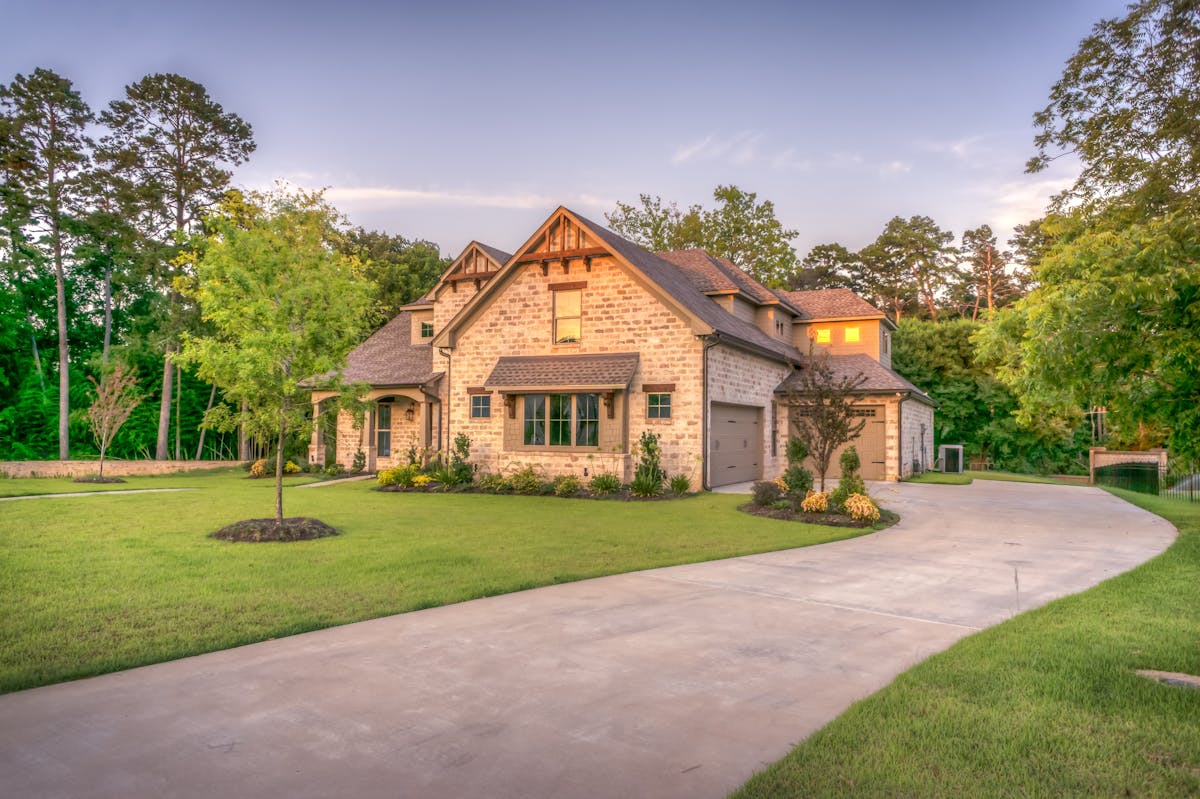
New build UK home with rooftop solar PV array meeting FHS requirements
Quick answer guide

How many solar panels do I need on a new build?

Under the Future Homes Standard, you need solar panels covering 40% of your ground floor area. Here's the panel count by house size.

Quick answer

For a typical UK 3-bed semi new build under the Future Homes Standard, you need 8 solar panels (3.4 kWp). For a 4-bed detached, 12 panels (5.2 kWp). For a 5-bed executive home, 18 panels (7.6 kWp).

The exact number depends on your ground floor area — the FHS rule is panel area equal to 40% of ground floor area. Below we walk through how to calculate it for any house type.

The FHS 40% rule explained

From 24 March 2027 every new dwelling in England must include solar PV with panel area equal to at least 40% of the dwelling\'s ground floor area. The rule is measured against ground floor area (not total floor area) and against panel area (not roof area). A standard residential solar panel measures roughly 1.7 m² and produces 425W of nameplate capacity.

The formula: Number of panels = (Ground floor area × 0.40) ÷ 1.7 m². For a 3-bed semi at 42.5 m² ground floor: 42.5 × 0.40 ÷ 1.7 = 10. We round up to 8-10 panels (closer to 8 in practice because typical UK new-build 3-bed roofs aren\'t configured for exact 10-panel arrays; suppliers fit the closest standard portrait array).

Panel count by house type — 2026 reference table

House type Ground floor Panel area needed Panels (425W) System (kWp) Annual kWh
2-bed terrace28 m²11 m²62.552,400
2-bed semi36 m²14 m²72.982,800
3-bed terrace38 m²15 m²7-83.0-3.42,850-3,200
3-bed semi (typical)42.5 m²17 m²83.43,200
3-bed detached50 m²20 m²104.03,750
4-bed semi50 m²20 m²104.03,750
4-bed detached (standard)65 m²26 m²12-135.24,900
4-bed townhouse38 m²15 m²7-83.0-3.42,850-3,200
5-bed executive95 m²38 m²187.67,200
6-bed prestige120 m²48 m²22-249.4-10.29,000-9,700

Annual generation figures assume a south-facing 35° roof pitch in the South Midlands (Loughborough reference irradiance). North-facing or east-west split arrays produce 10-25% less; south-facing roofs in the South West and South East produce up to 8% more.

When you need MORE panels than the FHS minimum

Three scenarios where you should specify above the 40% rule:

  • 1Heat pump heating + EV charging: If you\'ll have ASHP heating and an EV at the property, household electricity consumption rises to 8,000-12,000 kWh/year. A larger array (e.g. 5 kWp on a 3-bed) absorbs more of this demand and pulls forward payback.
  • 2Battery storage planned: A 10-13 kWh battery only delivers value if it has surplus PV to store. Specifying 25-40% above FHS minimum and pairing with battery storage lifts self-consumption from 55% to 78%+.
  • 3EPC band A target: Volume housebuilders selling at the premium end (~£500k+) increasingly target EPC band A (92+) rather than the band B that the FHS minimum delivers. A larger array helps cross the threshold.

When you can install FEWER panels than the FHS minimum

The Approved Document recognises four exemption categories: (1) flats in tall blocks where the building-attributable PV area is less than the per-dwelling 40%; (2) plots in heavy shade; (3) mansards and complex roofs in Conservation Areas; (4) listed-curtilage infill plots. Outside these cases the 40% rule applies. See our 40% PV rule page for the full Approved Document detail.

For an instant size for your specific plot, use our FHS PV calculator — enter ground floor area, get the exact panel count, kWp and installed cost in 30 seconds.

40% of ground floor area
PV / ground floor area
Mar 2027
FHS in force
75%
CO₂ vs 2013 baseline
£4,350 per dwelling
Per-plot premium
For developers and housebuilders

How many solar panels you need on a new build for volume new-build programmes

Per-plot pricing locked at procurement. Factory pre-fit on panelised roof cassettes. SAP/HEM modelling for every house type included. NHBC, LABC, Premier and Buildmark warranty-accepted workmanship. 20-year insurance-backed system warranty. We work with developers from 50 plots to 5,000+ across multi-site frameworks — agreed pricing, agreed programme, agreed warranty stack.

For self-builders and architects

How many solar panels you need on a new build for one-off custom builds

Engagement from RIBA Stage 2. PV sizing collaborative with the architect. SAP/HEM modelling that gives the architect freedom on glazing ratios and roof geometry. Building Control submission pack ready for the Approved Inspector. 0% VAT on new-build dwellings. Staged invoicing aligned to your self-build mortgage drawdowns. We work with custom-build buyers across England, Wales and Scotland.

How this fits into the FHS compliance pathway

Every FHS-compliant new build must pass three regulatory gates. How many solar panels you need on a new build fits primarily into the second gate — design-stage Part L compliance — but has knock-on implications for Building Control sign-off and post-completion warranty:

  1. 1
    Planning permission Most solar PV on new dwellings is consented within the dwelling\'s primary planning consent. Conservation Areas, Article 4 directions and listed-curtilage plots require additional planning consideration — we handle the planning evidence required for these.
  2. 2
    Building Control — Part L compliance SAP 10.3 or HEM compliance modelling demonstrating Dwelling Emission Rate ≤ Target Emission Rate. PV specification, ASHP capacity, fabric U-values and air permeability all entered into the modelling. We provide the full compliance file ready for the Approved Inspector.
  3. 3
    Post-completion — warranty & EPC MCS certificate, EPC, monitoring app onboarding and 20-year insurance-backed workmanship warranty. NHBC, LABC, Premier and Buildmark all accept our installation specification without query — important if you\'re relying on a structural warranty for buyer mortgageability.

For a fuller walkthrough of the compliance process, see our Part L 2026 page and the FHS PV calculator which sizes a compliant system from your ground floor area in 30 seconds.

FAQ — how many panels do I need

How many solar panels do I need on a new build in the UK?
Under the Future Homes Standard, the number of panels needed equals 40% of your ground floor area divided by the area of one panel. For a typical 3-bed semi (42.5 m² ground floor), that's 17 m² of panel area — roughly 8 standard 425W panels totalling 3.4 kWp. A 4-bed detached (65 m² ground floor) needs 12 panels (5.2 kWp). A 5-bed executive (95 m² ground floor) needs 18 panels (7.6 kWp).
How many solar panels does a 3-bed house need?
A 3-bed semi-detached typically needs 8 × 425W panels (3.4 kWp), covering 17 m² of roof area. A 3-bed detached typically needs 10 panels (4.0 kWp). A 3-bed terrace needs 7-8 panels (3.0 kWp). These figures reflect the Future Homes Standard 40% ground floor area rule that applies to all new dwellings in England from 24 March 2027.
How many solar panels does a 4-bed house need?
A 4-bed detached typically needs 12-13 × 425W panels (5.2 kWp), covering 26 m² of roof area. A 4-bed semi needs 10 panels (4.0 kWp). A 4-bed townhouse needs 7-8 panels (3.0 kWp) — smaller because townhouses have a smaller ground floor footprint spread over 3 storeys.
Is more than the FHS minimum worth it?
For self-builders, often yes. The marginal cost of adding 2-4 panels above the FHS minimum is small (~£200-£400 per panel installed); the marginal generation benefit is meaningful (~400 kWh/year per panel). Payback on the extra panels typically falls under 5 years at 2026 tariffs. For volume housebuilders, exceeding the minimum is usually only economic on premium plots where the marketing benefit of a higher EPC score affects sale price.
FHS 2027 deadline approaching

Get an FHS-compliant solar quote in 48 hours

Tell us your plot details — ground floor area, location and target start-on-site date. We return a fully-costed system sized to Part L 2026 (40% PV rule), with the SAP/HEM compliance pack included.