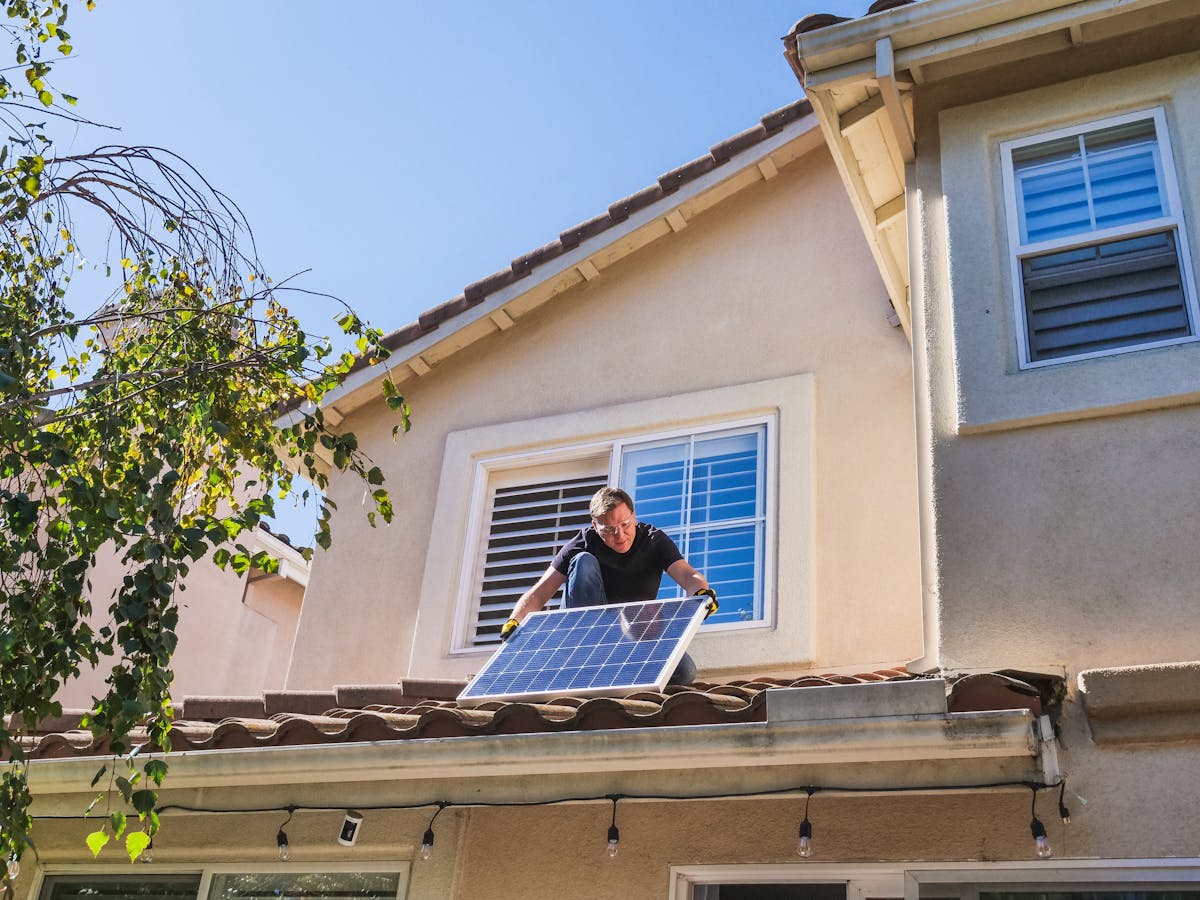
Most new-build solar PV is covered by permitted development rights or by the planning consent for the dwelling itself. Conservation Areas, Article 4 directions and listed-curtilage plots are the exceptions.
Permitted development for solar PV
The Town and Country Planning (General Permitted Development) Order grants permitted development for domestic-scale solar PV installations up to a single building — with restrictions in Conservation Areas, on listed buildings and within Article 4 areas. For new builds the more common route is approval of solar PV as part of the dwelling's planning consent at the application stage.
Conservation Areas
In Conservation Areas, solar PV is not always automatically permitted. The Local Planning Authority may impose conditions on placement (rear-facing roofs only), product (BIPV solar tiles rather than panel arrays), or design (matching slate or tile colour). Pre-application planning advice is the recommended approach.
Article 4 directions
Article 4 directions remove permitted development rights for specific areas — often heritage parts of historic towns. In an Article 4 area, all PV requires planning consent regardless of installation type. Major Article 4 areas include parts of Bath, Cambridge, Oxford and central London.
Listed buildings and listed-curtilage plots
New build dwellings within the curtilage of a listed building need Listed Building Consent for any external alterations. BIPV solar tiles matching the listed building's heritage materials are usually acceptable; panel arrays usually are not.
The 2026 NPPF change
The 2026 National Planning Policy Framework update (effective March 2026) places greater weight on renewable energy generation in planning decisions, including in Conservation Areas. In practice this has not eliminated heritage-area planning sensitivity but has shifted the balance towards approval where the visual impact is reasonable.